Pruning Your Fruit Tree
Various pruning techniques are used for each type of tree and with well-managed fruit trees your home orchard will be productive and enjoyable.
Aim to have a balanced ratio of 1-,2-, and 3-year wood on a producing tree.
Fruit production declines on 4-5-year wood. Pruning makes the fruit tree!
Apples and Pears need dormant pruning (Dec.-Mar.) to maintain the form of the tree.
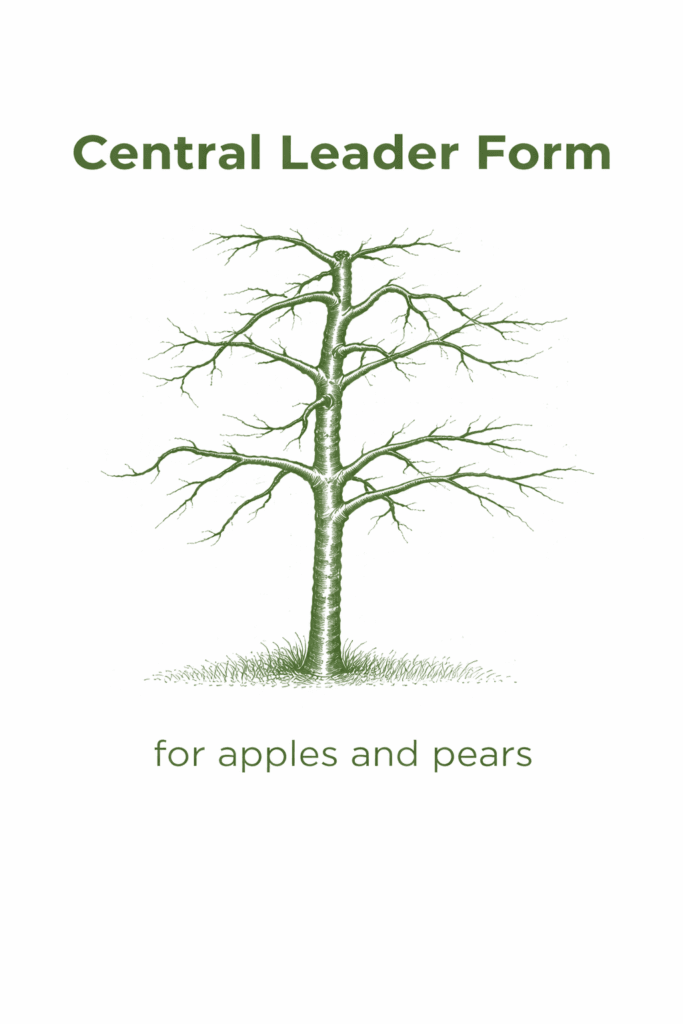
- Remove branches that are 1/2 or 2/3 the size of the main trunk. For a new shoot to emerge, leave a stub or level cut. Otherwise, make a flush cut.
- Cut Ys to a single branch.
- Remove weak, thin, and nonproductive wood.
- Remove excessive upright growth and cater to horizontal branches for the best fruiting wood.
Prune in June to limit the size of your tree.
- Remove unneeded young waterspouts and tip off extra long shoots.
- Prune as needed to expose fruits to sunlight.
Stone fruits (peaches, nectarines, Japanese plums) are pruned differently than apples because they produce on previous year’s growth.
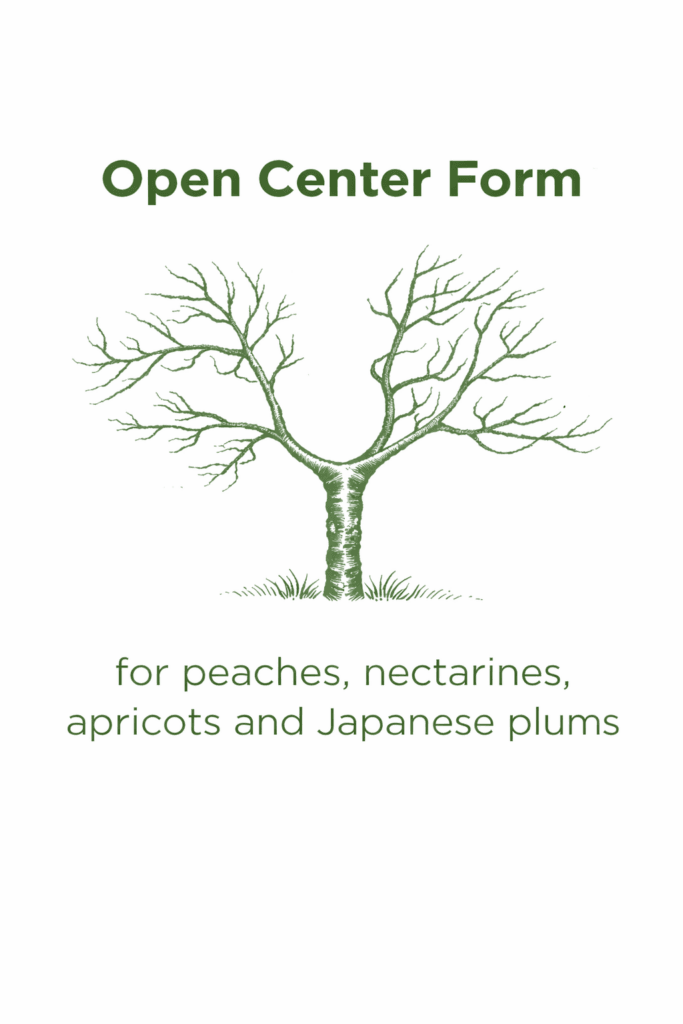
- The best time to prune is late spring (April).
- Remove 1/3 t o 1/2 of the previous year’s growth. This still leaves ample wood for fruiting.
- Watch for small shoots that grow from the sides of main branches. Use those to eventually replace older limbs and to keep tree young.
- Keep center open.
Plum trees need dormant pruning (Dec.-Mar.) to maintain the form of the tree
- Remove branches that are 1/2 or 2/3 the size of the main trunk. For a new shoots to emerge, leave a stub or bevel cut. Otherwise, make a flush cut.
- Cut Ys to a single branch.
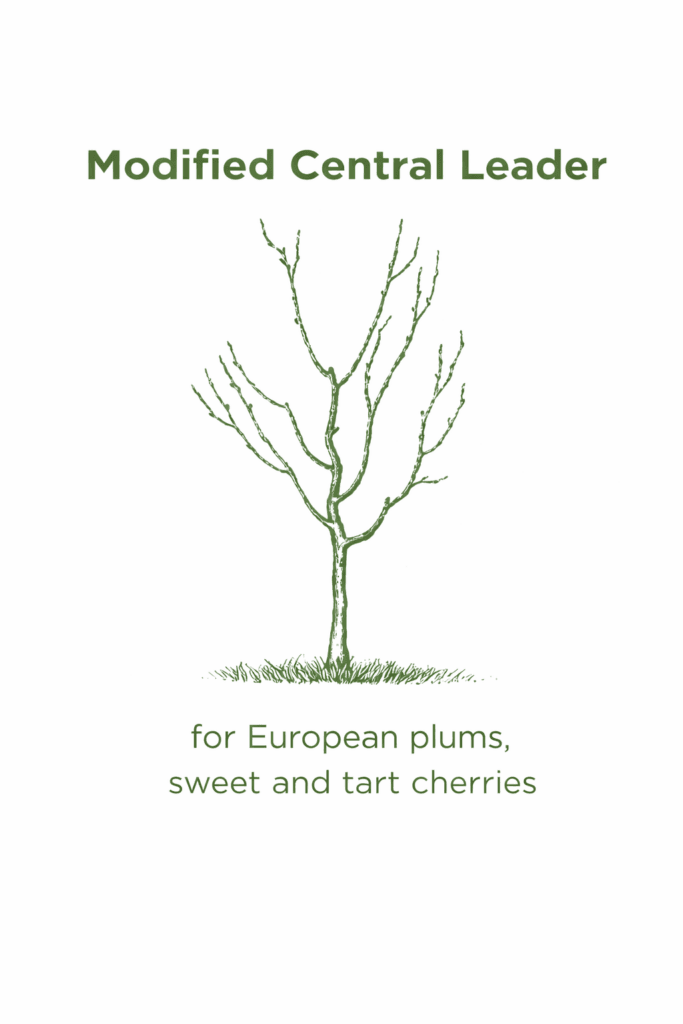
- Remove weak, thin, and nonproductive wood.
- Remove excessive upright growth and cater to horizontal branches for the best fruiting wood.
Cherry trees need a special pruning sequence.
- Reduce length of shoots by 1/3 in late dormant spring pruning.
- WAIT to remove large limbs until right after cherry harvest. A dry, sunny day in July is best.
- Remove 1-2 large limbs annually on mature trees.
- Stub back several more older limbs to promote new growth. Stubs can be from 3″-6″ to 2′-3′ in length, depending on position on branch.
- Always leave a small stub to prevent canker infections. Keep center open to sunlight so inside limbs remain actively growing.